Showing posts with label Children. Show all posts

Friday, 11 January 2013

IMPLAN KOKLEAR


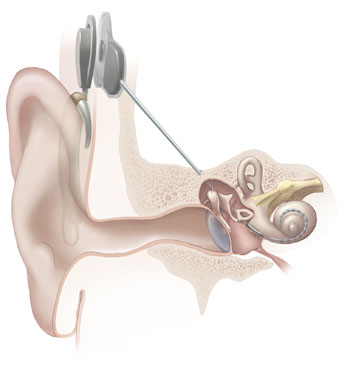
Implan koklear merupakan alat pendengaran elektronik yang ditanam ke dalam koklea melalui kaedah pembedahan. Ianya dapat membantu memulihkan pendengaran bagi mereka yang tidak dapat lagi dibantu dengan alat bantu pendengaran biasa (hearing aids), selalunya di kalangan pesakit yang mempunyai masalah pendengaran yang teruk.
Implan koklear terdiri daripada 2 komponen iaitu komponen dalam (yang ditanam) dan komponen luar. Komponen dalam pula terdiri daripada elektrod koklear dan alat penerima (receiver). Komposisi komponen luar pula adalah mikrofon, alat proses bunyi (speech processor) dan alat pemancar (transmitter).


Wikipedia image

Siapa yang sesuai menggunakan implan koklear?
Kanak-kanak dan orang dewasa yang mempunyai masalah pendengaran yang teruk sesuai menggunakan implan koklear. Mereka selalunya masih tidak dapat mendengar walaupun menggunakan alat bantu pendengaran (hearing aids) yang canggih.
Orang dewasa yang kehilangan pendengaran akibat jangkitan kuman pada telinga dalam adalah di kalangan mereka yang sesuai menggunakan implan koklear.
Kanak-kanak yang lahir pekak juga antara mereka yang boleh menggunakan implan koklear. Selalunya pembedahan implan koklear dilakukan sebelum umur 4-5 tahun. Lebih awal pembedahan implan koklear dilakukan, lebih senang bagi kanak-kanak tersebut mencapai tumbesaran sosial dan percakapan yang normal.

Proses sebelum pembedahan implan koklear
Pesakit yang mempunyai masalah pendengaran teruk perlu menjalani pemeriksaan klinikal oleh pakar ENT. Kemudiannya ujian pedengaran akan dilakukan untuk memastikan tahap pendengaran.
Pesakit kemudiannya dipakaikan alat bantu pendengaran yang paling sesuai untuk memberi amplifikasi bunyi yang maksimum. Pemantauan pemakaian alat bantu pendengaran akan dilakukan oleh pakar audiologi untuk memastikan samada pesakit memperoleh tahap pendengaran yang optimum atau perlu menggunakan implan koklear.
Pesakit juga perlu menjalani pemeriksaan oleh pakar pertuturan sebelum menjalani pembedahan implan koklear.
Pemeriksaan imbasan CT (computed tomography scan) dan MRI (magnetic resonance imaging) juga perlu dilakukan bagi memeriksa struktur telinga dalam dan koklea.


Rawatan lanjutan selepas pembedahan implan koklear
Selepas pembedahan implan koklear dilakukan, pesakit perlu menjalani terapi audiologi dan pertuturan yang intensif dan kerap. Minggu pertama selepas pembedahan, jahitan luka pembedahan akan dibuka. Pemasangan komponen luar implan koklear (switch-on) akan dilakukan selepas 3 minggu apabila luka pembedahan sembuh sepenuhnya.
Selepas pemasangan tersebut pesakit akan lebih kerap berjumpa dengan pakar audiologi dan pakar pertuturan untuk terapi lanjutan.
Pesakit dan ahli keluarga juga perlu komited untuk menjalani rawatan intensif ini di klinik dan praktikkannya di rumah untuk memastikan pesakit berjaya mencapai pertuturan/percakapan yang normal, terutamanya bagi pesakit kanak-kanak. Proses ini lebih mudah bagi pesakit dewasa kerana mereka pernah mempunyai pendengaran dan pertuturan yang normal sebelum menjadi pekak.


Tuesday, 19 June 2012

SUSAH BERNAFAS SEBAB HIDUNG TERSUMBAT


Hidung tersumbat boleh menyebabkan seseorang merasa sesak nafas, tidur berdengkur, bernafas melalui mulut, suara sengau, sakit kepala, berat kepala, letih dan lesu. Seringkali hidung menjadi tersumbat oleh sebab jangkitan virus atau bakteria semasa demam selsema dan ia akan pulih dalam masa yang singkat. Walaubagaimanapun ada sesetengah pesakit gejala hidung tersumbat ini berlaku pada bila-bila masa atau berpanjangan.

Ruang hidung manusia terbahagi kepada dua; belah kanan dan kiri. Ia dipisahkan oleh tulang tengah iaitu ‘septum’. Masalah hidung tersumbat boleh disebabkan oleh bentuk septum yang bengkok atau bengkakan pada selaput dalam hidung. Selaput hidung boleh menjadi bengkak disebabkan jangkitan kuman, alahan (alergi), polip hidung (nasal polyposis) atau ketumbuhan hidung (tumour). Pada peringkat umur kanak-kanak tisu adenoid yang besar seringkali menjadi punca hidung tersumbat. Terdapat juga insiden di mana bendasing menyebabkan sebelah hidung tersumbat dan berair pada kanak-kanak.

Apa lagi gejala lain berkaitan dengan hidung tersumbat?

Doktor akan bertanya beberapa soalan seperti berikut:
  • Berapa lama masalah ini berlaku?
  • Hidung sebelah mana atau kedua-duanya yang tersumbat?
  • Adakah masalah ini semakin serius dalam jangka masa terdekat?
  • Adakah tuan/puan mengalami sentiasa bersin, hidung gatal, hidung berair?
  • Adakah tuan/puan mengalami masalah sakit kepala, tidur berdengkur?
  • Bagaimana dengan deria bau dan rasa? Adakah ia berkurangan?
  • Pernah mengalami hidung berdarah?
  • Pernah mengalami trauma pada hidung?
  • Adakah tuan/puan menggunakan ubat sembur hidung yang mengandungi pseudoephedrine atau mengambil ubat aspirin?
  • Adakah tuan/puan mengalami masalah kesihatan yang lain seperti lelah, darah tinggi, masalah tiroid etc?

Bagaimana doktor pakar ENT mengenalpasti punca hidung tersumbat?

Setelah mendapat riwayat penyakit dengan teliti, pakar ENT akan memeriksa bahagian ruang hidung dengan menggunakan skop di klinik. Ini membolehkan pakar tersebut melihat dengan lebih jelas ruang dalam hidung dan mengenalpasti punca hidung tersumbat. Selalunya imej skop tersebut disambung kepada kamera dan dipaparkan di atas skrin TV agar pesakit juga dapat melihat dengan sendiri.

Kadangkala doktor akan mengesyorkan pemeriksaan lanjutan seperti ujian darah, ujian alahan atau CT scan. Tetapi ini bergantung kepada setiap kes pesakit dan bukan semua pesakit perlu pemeriksaan lanjutan tersebut.

Rawatan bagi hidung tersumbat

Rawatan hidung tersumbat bergantung kepada puncanya. Sekiranya ia berkaitan demam selsema, rawatan perubatan dapat memulihkan keadaan yang selalunya bersifat sementara.

Rawatan perubatan yang sering disyorkan termasuk ubat sembur hidung (intranasal steroids, nasal decongestant, saline wash/spray) dan pil (antihistamine, decongestant) dalam pelbagai kombinasi. Antibiotik juga perlu sekiranya ada jangkitan bakteria. Ia adalah penting bagi pesakit menggunakan ubat seperti yang disarankan oleh doktor yang merawat. Kadangkala ia mengambil masa beberapa minggu untuk hidung tersumbat menjadi lega.

Sekiranya rawatan perubatan gagal untuk memulihkan masalah hidung sumbat, pakar ENT mungkin mengesyorkan pembedahan (surgeri). Jenis pembedahan bergantung kepada punca masalah hidung tersumbat. Contohnya pembedahan septum (septoplasty) dinasihatkan sekiranya pesakit mengalami tulang septum yang bengkok. Ada juga pembedahan turbinat hidung untuk mengecutkan selaput yang bengkak. Endoscopic sinus surgery pula disyorkan bagi mereka yang bermasalah polip hidung dan sinusitis. Tisu adenoid yang bengkak juga boleh dibedah sekiranya rawatan perubatan gagal. Perlu diingatkan bahawa ada beberapa cara untuk mengatasi masalah hidung tersumbat dan doktor pakar akan menasihatkan rawatan yang paling sesuai bagi setiap pesakit.


Saturday, 9 June 2012

CHRONIC OTITIS MEDIA

Article published in KPJ Klang Specialist website
Link to website article: Chronic Otitis Media authored by Dr Mazita Ami


Chronic otitis media occurs due to chronic inflammation or infection of the middle ear mucosa and mastoid air cells.
It can occur from an acute otitis media infection that does not resolve completely or repeated infections. It usually presents as persistent ear discharge, reduced hearing and a perforated ear drum. Pain and fever are less common symptoms compared to patients with acute otitis media.

How does it occur?

It starts with an upper respiratory tract infection that causes nasal congestion and blockage of the Eustachian tube. This will lead to poor equalization of pressure in the middle ear thus causing fluid accumulation in the middle ear.
This fluid may get infected with bacteria and cause an acute infection.
If the Eustachian tube is continuously blocked or the infection not adequately treated the middle ear infection persists and lead to ear drum perforation and damage to the ossicles.

Treatment for chronic otitis media

Ear care is very important and patients are advised to prevent water entering the ears whilst bathing. Swimming is also discouraged when there is ongoing infection and perforated ear drums. This is to prevent the vicious cycle of repeated infections.

Antibiotic ear drops and oral antibiotics are prescribed. Nasal decongestants are often given to help alleviate the underlying nasal congestion.

If the infection resolve and the patient is left with a dry perforated ear drum, surgical repair of the ear drum (myringoplasty) can be performed. Sometimes there is need to repair the damaged ossicles at the same time.

However if the ear discharge and infection persists despite adequate medical treatment, mastoid surgery is advised to rid of the diseased mastoid bone and achieve a healthy ear.

When is it not just a ‘simple’ ear infection?

Otitis media or infection of the middle ear can spread to surrounding structures and cause complications. These complications include meningitis, brain abscess, inner ear infection and facial weakness. Symptoms to look out for are severe headache, nausea, vomiting, dizziness/spinning sensation with hearing loss.


Tuesday, 8 May 2012

POST TONSILLECTOMY CARE


TONSILLECTOMY
Tonsillectomy is a surgical procedure to remove the tonsils which are lymphoid tissues situated at the back of the throat. It is recommended when the patient has repeated tonsillitis, enlarged tonsils, suspicion of tumour or peritonsillar abscess. The surgeon would only advise for tonsillectomy when the benefits of the procedure outweigh the possible risks and complications. Tonsillectomy is performed under general anaesthesia via trans-oral approach; that is through the mouth opening.
Typical appearance of the back of the throat three days post tonsillectomy
(Wikipedia.org)

COMPLICATIONS OF TONSILLECTOMY
Bleeding- the tonsil area has a rich blood supply and care is taken to stop any bleeding intraoperatively. The risk of bleeding after tonsillectomy is very low and usually present with blood stained saliva. On rare occasions the bleeding can be severe and have to be managed in the operating theatre. Risk of bleeding is higher when there is infection.

Infection- it is a potential risk especially in patients with inadequate food and fluid intake after tonsillectomy. Patients with infection post tonsillectomy will have symptoms of severe throat pain and bleeding. Treatment is mainly antibiotics and may require re-admission.

Injury to lip/mouth- instruments are inserted to help open up the mouth during surgery. There is a small risk of injury to lip, mouth or teeth during this procedure.

POST OP CARE
  • Pain post tonsillectomy can be severe and lasts up to 2 weeks. However in children the recovery is much faster usually within 1 week. Sometimes the pain can get worse between 3 to 5 days after the surgery before it gets better. Patients are advised to take their painkiller medication regularly.
  • Swallowing can be difficult after surgery because of the pain. However patients are encouraged to drink and eat as soon as they wake up after surgery. It may be easier to take cold fluids and soft food initially. Taking small sips of fluids may be easier than big swallows. Avoid taking any spicy or hot food to reduce risk of bleeding. Eating well would also lead to better and faster healing of the operated area.
  • Avoid going out to public places. Patients are advised to rest at home for about 1-2 weeks. This can prevent exposure to infection.
  • Small amounts of blood stained saliva can be normal in the first 2 weeks and can be stopped with ice gargles. However if bleeding is continuous and increasing in amount, do seek immediate medical attention at the hospital where the surgery was performed.
Printable patient leaflet

Monday, 19 March 2012

HOLIDAY BUGS


It’s the school holidays and with the busy jammed packed holiday resorts the children especially can easily catch an infection such as the common cold. Public places are a constant source of germs and we pick them up in playgrounds, supermarket trolley handles, lift buttons, armrests, public transport, swimming pools etc. But bear in mind that it’s pretty normal for a child to have between 6-8 colds a year in the first three years.
The common cold gives rise to symptoms of nasal congestion, runny nose, sore throat and fever. It is caused by the adenovirus and coronavirus and usually runs a self limiting course.  These symptoms last between seven to ten days. Therefore patients rarely need antibiotics unless there is superadded bacterial infection. Treatment of the common cold is symptomatic ie paracetamol/brufen for the fever, oral decongestant/nasal decongestant spray for the blocked nose, cough syrup etc. Hence why a nice bowl of hot chicken soup makes the patient feels better. Symptomatic treatment only helps to ease the symptoms but it’s the patient’s immune system that will continue working against the infection. 

When do we need antibiotics?
Antibiotics are prescribed when there is superadded bacterial infection. Usually this occurs when there’s complication due to spread of the infection.
  • Sinusitis- Patients will have badly congested nose, post nasal drip, yellow to greenish phlegm, headache, facial pain/fullness.
  • Otitis media- Patients will complain of pain in the ear with high grade fever. The ear feels blocked and may have ear discharge.
  • Throat infection such as tonsillitis or severe laryngopharyngitis- This is commonly due to the postnasal drip. In common cold, initial throat discomfort caused by the viral infection is common. However if the sore throat becomes severe and there is pain on swallowing, most likely there is superadded bacterial infection such as Streptococcus.
  • Lung infection such as bronchitis or pneumonia- Patients will present with productive cough, shortness of breath and fever. 

Best remedy- prevention, prevention & prevention
Good hygiene can reduce the exposure and risk of catching a cold. However bear in mind that ‘too much’ hygiene or ‘living in a bubble’ is also not advisable because exposure to some germs are needed to mature and strengthen the immune system. So moderation is the key. (Look up articles on hygiene hypothesis)
  1. Proper hand hygiene and handwashing technique
  2. Avoid close contact with anyone having a cold and do not share utensils
  3. Best to use tissues that can be disposed after use         
  4. Keep the house/bedrooms well ventilated
  5. Boost your immune system- many good habits such as taking supplements, adequate sleep, regular exercise, reduce stress and avoid smoking. There are many articles written on this topic and I leave it to individuals to find what’s best for them. I find this article apt at summarizing this topic Strengthen your immune system 


Monday, 19 September 2011

Hearing screening for babies

Hearing is one of the senses that we are blessed with from birth. However some babies are born with hearing problems. A baby's speech development is affected if his/her hearing is abnormal. Normally it is difficult for parents to tell if their baby's hearing is normal or not at birth. It only becomes apparent later when the baby does not respond to loud sounds or to their names or when they do not develop speech.

Why is it important to get the hearing checked at birth?
Hearing loss is a common disorder at birth and can affect up to 1.3 to 6 per 1000 live births. Hearing loss in a newborn baby is also a condition which cannot be seen physically. Therefore often the hearing loss is detected late. The Joint Committee on Infant Hearing states that a baby with hearing loss should have diagnostic hearing test by 3 months of age and hearing intervention no later than 6 months of age. Infants who are deaf or hard of hearing will lose out on their peers in terms of speech development, social skills, reading skills, communication skills and cognition.


How is the test performed?

Photo: A woman checking a newborn's hearingNewborn hearing screening test is done soon after birth to detect if the baby has normal hearing to develop speech. It is a simple non invasive test that needs to be done in a quiet room or even the mother's bedside when it's quiet. Usually the test is done by a professional personnel such as a trained nurse or medical assistant. A small soft ear phone is inserted into the ears during the test. The baby would hear either soft tones or clicks through the earphones. Both ears are checked separately.


What are the possible results of the newborn hearing screening?
After the test is completed the machine will either produce a 'pass' or 'refer' results. Having obtained a 'pass' means that your baby's hearing is considered normal to enable him/her to develop normal speech. Obtaining a 'refer' results means that your baby needs to have further assessment to confirm if there is a permanent hearing loss. The hearing screening does not confirm nor diagnose a hearing loss.

Further hearing assessments
If the results are 'refer', the health personnel who conducted the hearing screening test would then schedule the baby for further hearing test in a few weeks' time. These confirmatory hearing tests (Auditory Brain Stem Reflex) are non-invasive and usually done by the Audiologist in their clinic. These tests take a bit longer to perform and the baby should be asleep throughout the test.

If my baby has passed the hearing screening, will he/she have any hearing problems in the future?
The baby's hearing must still be monitored as he/she is growing up. Parents can do the monitoring at home and bring their child to the doctor's if they suspect that the hearing is abnormal. This is because the child may still develop ear problems such as  glue ear (middle ear effusion), otitis media (infection of middle ear), impacted ear wax and other ear conditions which can affect the hearing.

Newborn hearing screening is a routine test performed in most hospitals for the newborn. The hearing screening is done as part of the usual screening tests for babies to detect any congenital medical conditions. Make sure to ask your doctor about newborn hearing screening for your baby. Ensuring normal hearing for your baby can give him/her a headstart in life.


Reference
Year 2007 Position Statement: Principles and Guidelines for Early Hearing Detection and Intervention Programs (http://pediatrics.aappublications.org/content/120/4/898.fullijkey=oj9BAleq21OlA&keytype=ref&siteid=aapjournals)

Photo credit
http://www.cdc.gov/features/newbornHearing/